
In the context of an MDF (Medium-Density Fiberboard) production line, a defibrator (also commonly referred to as a refiner) is a critical machine responsible for breaking down wood chips into individual wood fibers. This process, known as defibration, is essential for creating the raw material used to form MDF panels. Here's a detailed breakdown:


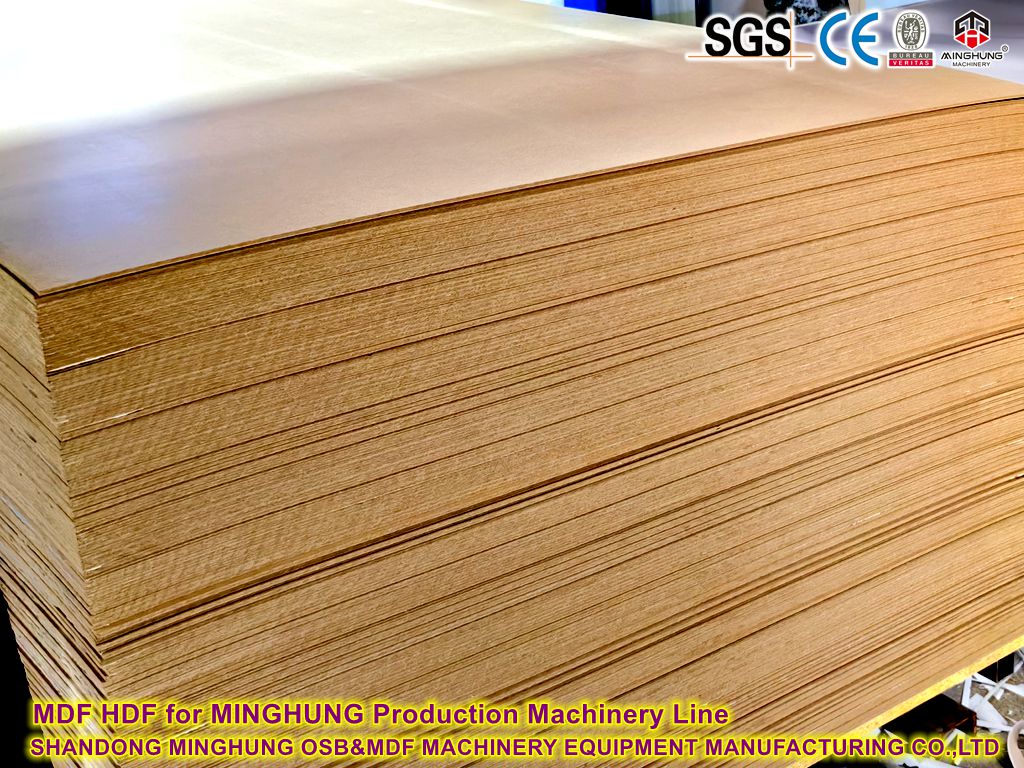
Key Functions of a Defibrator in MDF Production:
1. Fiber Separation:
Mechanically separates wood chips into individual fibers using rotating discs (typically one stationary and one rotating) with grooved surfaces.
May use steam pretreatment to soften lignin in the wood, reducing energy consumption and minimizing fiber damage.
2. Process Integration:
Positioned after chipping/drying and before resin blending and mat formation.
Works in a dry process environment (unlike wet pulp methods for paper), ensuring fibers remain dry for subsequent resin application.
3. Fiber Quality Control:
Adjustable disc gap settings to refine fiber size and consistency.
Ensures fibers are neither too coarse (risk of uneven density) nor too fine (risk of reduced strength).
Types of Defibrators/Refiners:
Single-Disc Refiners: One rotating disc against a stationary plate.
Double-Disc Refiners: Two counter-rotating discs for higher efficiency.
Conical Refiners: Conical-shaped discs for specific refining needs.
Operational Considerations:
Thermomechanical Processing: Combines heat (steam) and mechanical energy to optimize fiber separation.
Energy Efficiency: Modern defibrators prioritize reducing energy consumption while maintaining fiber quality.
Maintenance: Regular wear checks on discs/grooves to ensure consistent fiber output.
Impact on MDF Quality:
Proper defibration ensures uniform resin distribution, leading to consistent panel density and strength.
Over-refining can weaken fibers, while under-refining may cause board defects.
Post-Defibration Steps:
1. Drying: Fibers are dried to ~8–12% moisture content.
2. Resin Blending: Fibers are mixed with urea-formaldehyde (or other) resin and wax.
3. Mat Formation and Hot Pressing: Fibers are formed into a mat and compressed under heat to create the final MDF panel.
Summary:
A defibrator is a cornerstone of MDF production, transforming wood chips into usable fibers. Its design and operation directly influence the efficiency of the production line and the quality of the final product. Advances in defibrator technology continue to improve energy efficiency and fiber consistency, supporting the sustainable manufacturing of high-performance MDF.
Whatsapp: +8618769900191 +8618954906501 +8615589105786
Email: osbmdfmachinery@gmail.com