Views: 100 Author: Site Editor Publish Time: 23-03-2026 Origin: Site
The construction industry relies heavily on structural wood panels, with Oriented Strand Board (OSB) and Plywood serving as the two primary pillars of the market. While both materials provide the necessary strength and stability for subflooring, wall sheathing, and roof decking, their underlying manufacturing processes are fundamentally distinct. Understanding these differences is crucial for manufacturers investing in an OSB Production Line or seeking to optimize their wood-based panel output to meet specific structural performance requirements.
The manufacturing processes differ because OSB is an engineered panel created by compressing layers of wood strands with adhesive in specific orientations, whereas Plywood is manufactured by bonding thin layers of wood veneer, known as plies, with the grain of each layer running perpendicular to the adjacent one.
Choosing the right technology for panel production requires a deep dive into the mechanical and chemical processes involved in transforming raw logs into high-performance structural components. Whether you are focusing on a traditional veneer-based approach or the high-efficiency, resin-intensive OSB Production Line process, the output quality is dictated by the precision of your machinery and the consistency of the feedstock.
Raw Material Preparation and Initial Processing
The Mechanical Differences in Panel Formation
Resin Application and Chemical Bonding
Heat and Pressure Dynamics in the Pressing Stage
Performance Characteristics and Structural Applications
Technological Considerations for an OSB Production Line
In the production of OSB, logs are debarked and fed into specialized disc or ring stranders to create long, thin strands, whereas in Plywood production, logs are softened through heating and then peeled into thin, continuous sheets of veneer using a rotary lathe.
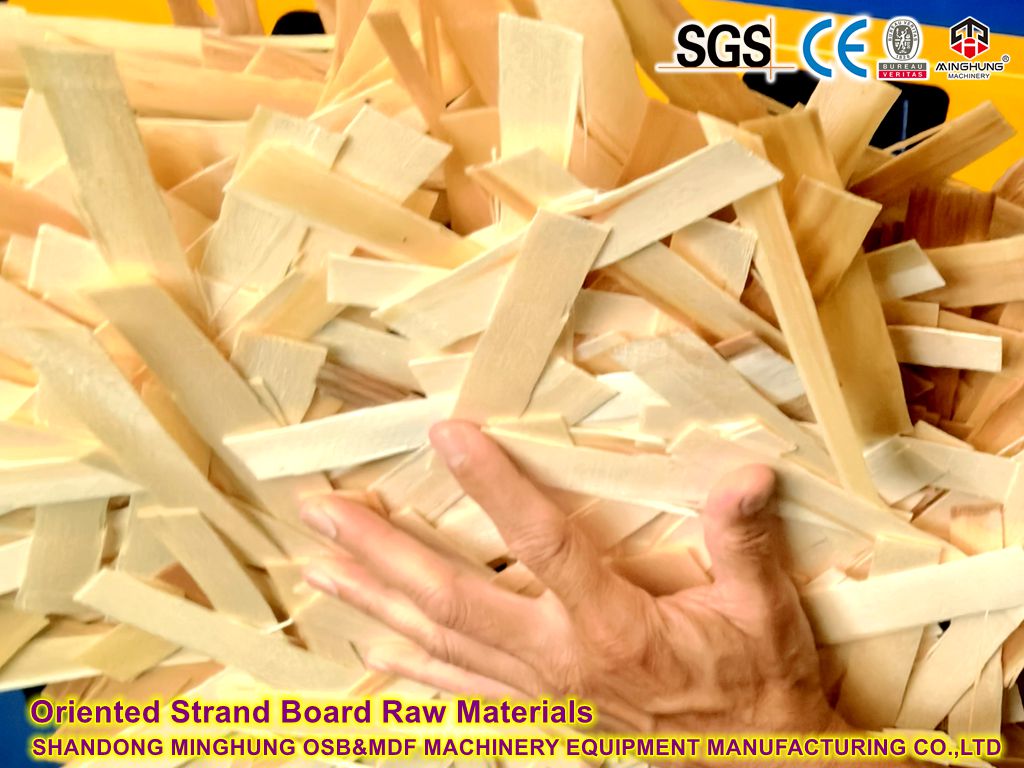
wood shavings
veneer
The preparation phase is the most visually distinct step in these two manufacturing workflows. For anOSB Production Line, the primary objective is to maximize the length and width of the wood strands. These strands are the building blocks of the board, and their geometry directly impacts the final structural integrity. The stranding process must be finely tuned to minimize fine dust and oversized chips, which can compromise the structural load-bearing capacity of the final board.
In contrast, Plywood manufacturing centers on the preservation of the natural fiber orientation of the tree. The logs are cut into bolts and often conditioned in hot water vats or steam chambers to improve the peeling characteristics of the wood. The rotary lathe peels the log in a continuous motion, producing veneer sheets that reflect the natural grain pattern of the wood. This requires precise control over the knife angle and pressure bar settings to ensure uniform thickness across the entire sheet.
The efficiency of an OSB Production Line heavily depends on the consistency of the strand geometry. If the strands are too small, the internal bond strength of the board suffers. Conversely, in Plywood, the quality of the veneer dictates the surface grade and internal glue-line performance. Both processes require robust wood yard management, but the mechanical path from log to material input diverges immediately after the debarking stage.
OSB is formed by aligning wood strands in a cross-directional pattern using specialized forming stations to create high-strength layers, while Plywood is formed by stacking veneer sheets with the grain of each layer oriented perpendicularly to the next.
The structural strength of these panels is derived from how the wood elements are layered. An OSB Production Line utilizes sophisticated orientation equipment. Typically, the outer layers of an OSB panel are oriented in the long direction of the board to provide bending stiffness, while the inner layers are randomly oriented or oriented perpendicularly to provide shear strength. This cross-layering is the "secret sauce" that allows OSB to mimic the structural behavior of solid wood.

Plywood formation is inherently more manual or semi-automated, involving the stacking of pre-cut veneers. Because the wood is already in a sheet format, the orientation is dictated by the layout of the veneers. The process requires a glue spreader to apply adhesive to one or both sides of the veneer sheets before they are laid up into the desired thickness—often an odd number of layers to ensure balanced expansion and contraction.

The technology integrated into an OSB Production Line is designed to handle this orientation process at high speeds. Modern lines feature automated forming heads that can adjust the percentage of longitudinal versus transverse strands on the fly. This level of control is necessary because the mechanical properties of the finished OSB board can be adjusted by changing the strand orientation profile, allowing manufacturers to optimize the board for specific engineering requirements.
OSB manufacturing relies on high-speed drum or disk blenders to coat strands uniformly with resins and waxes, whereas Plywood production uses roller coaters or curtain coaters to apply liquid glue directly onto the surfaces of the veneer sheets.
Chemistry is the backbone of panel performance. In an OSB Production Line, the blending process is critical because the surface area of the millions of strands is enormous compared to the flat surface area of a veneer sheet. Manufacturers use atomized sprays of MDI (methylene diphenyl diisocyanate) or phenolic resins to ensure that every strand is thoroughly coated without wasting excess material. Waxes are also added during this stage to provide the necessary moisture resistance for exterior applications.

Plywood glue application is a simpler, yet equally precise, operation. The veneers pass through a glue spreader, which consists of rubber-covered rollers that deposit a controlled amount of glue on the wood surface. The key challenge in Plywood production is ensuring the glue is applied evenly enough to avoid "starved" spots, which lead to delamination, or "thick" spots, which lead to internal blowouts during the pressing phase.

When considering the equipment for an OSB Production Line, the blending system is often the highest-maintenance component due to resin buildup. Frequent cleaning cycles and advanced moisture control systems are integrated to ensure the strands remain at the correct moisture content—typically 5 to 8 percent—before the resin is applied. The efficiency of this chemical application stage significantly impacts the final cost-per-unit of the structural board.
OSB panels are cured under high heat and pressure in a continuous press or multi-opening press to activate the resins and consolidate the mat, whereas Plywood panels are consolidated in a heated press to set the glue lines between veneer sheets.
The pressing stage is where the "engineering" of the board becomes permanent. In a modern OSB Production Line, the mat of strands is pressed into a solid panel using immense pressure and heat, often exceeding 200 degrees Celsius. This process causes the resin to thermoset, locking the strands into their oriented positions. Modern continuous presses have revolutionized this part of the process, allowing for faster throughput and more consistent board thickness compared to older multi-opening presses.
multi-daylight press
continuous hot press
Plywood pressing is generally a slower, batch-oriented process. The stacked veneers must be held under pressure until the heat from the press platens has penetrated all layers, curing the glue at the center of the panel. This is why thicker Plywood panels take significantly longer to produce than thinner ones. The pressing time is strictly limited by the time it takes for heat to travel through the wood to the center glue lines.

For those evaluating an OSB Production Line, the transition to continuous pressing technology has significantly reduced the variation in board density. A continuous press allows for a "density profile" to be programmed into the board, creating a denser surface (for better fastening) and a slightly less dense core (for cost efficiency). This level of control over the board's internal architecture is a major advantage of the OSB process compared to the more rigid Plywood structure.
OSB offers exceptional consistency and cost-efficiency for structural applications like wall and roof sheathing, while Plywood is often preferred for high-strength requirements, concrete forming, and applications where the aesthetic appearance of the wood grain is a priority.
The final performance of these panels reflects their manufacturing roots. Because OSB is an engineered product, the density and structural properties can be manipulated during the OSB Production Line process. This results in a product with very few internal voids or knots, providing excellent fastener holding power. It is the dominant material for residential framing, providing a cost-effective solution for structural sheathing.
Plywood, however, remains the gold standard for specific high-performance sectors. Because it utilizes solid wood sheets, it maintains the intrinsic strength of the original wood fibers in a more predictable way. It is highly resistant to "spring-back" when wet and is frequently the material of choice for demanding applications like marine-grade panels, subflooring in high-traffic environments, and architectural woodwork where the face veneer is visually important.
Feature | OSB (Oriented Strand Board) | Plywood |
Primary Input | Wood Strands | Veneer Sheets |
Manufacturing Line | OSB Production Line | Veneer Lathe & Lay-up |
Fiber Orientation | Controlled by forming station | Fixed by veneer grain |
Internal Voids | Minimal (engineered) | Possible (due to core knots) |
Cost | Generally more economical | Generally higher |
Best Application | Wall/Roof sheathing, Flooring | Concrete form, Marine, Finishes |
Investing in an OSB Production Line requires a focus on automated strand orientation, high-efficiency blending systems, and continuous pressing technology to ensure the final product meets modern building code requirements and provides maximum structural consistency.
When designing or upgrading an OSB Production Line, the integration of sensors and digital feedback loops is essential. Modern lines utilize real-time scanners to monitor strand alignment and moisture content before the mat enters the press. Any deviation in these parameters can lead to significant waste, as the production speeds are incredibly high. By focusing on the precision of the forming and pressing stages, manufacturers can ensure that every board produced meets the high structural standards required for global construction markets.
The transition from a raw, natural material to a high-precision engineered panel is the defining feature of the OSB Production Line. Unlike Plywood, which is a collection of wood layers, OSB is a material system. By controlling the length, thickness, and orientation of the strands, the manufacturing process can be tuned to optimize for bending, shear, or moisture resistance. This versatility is precisely why OSB has gained such a dominant share of the structural panel market.
In conclusion, while both Plywood and OSB occupy a similar space in the structural panel market, their manufacturing processes offer different advantages. For manufacturers looking to scale production and achieve high levels of consistency, the OSB Production Line offers a sophisticated, engineered approach to wood utilization. By leveraging modern technology in stranding, orientation, and continuous pressing, producers can deliver high-quality materials that satisfy the evolving needs of the construction industry.
The manufacturing divergence between OSB and Plywood is not merely a matter of machinery, but a fundamental difference in philosophy: Plywood focuses on the preservation of the natural wood sheet, whereas an OSB Production Line focuses on the engineering of wood strands to create a predictable, uniform, and cost-effective structural panel. Choosing the right path depends on your target market, the availability of raw materials, and your commitment to automated, high-throughput production technology.
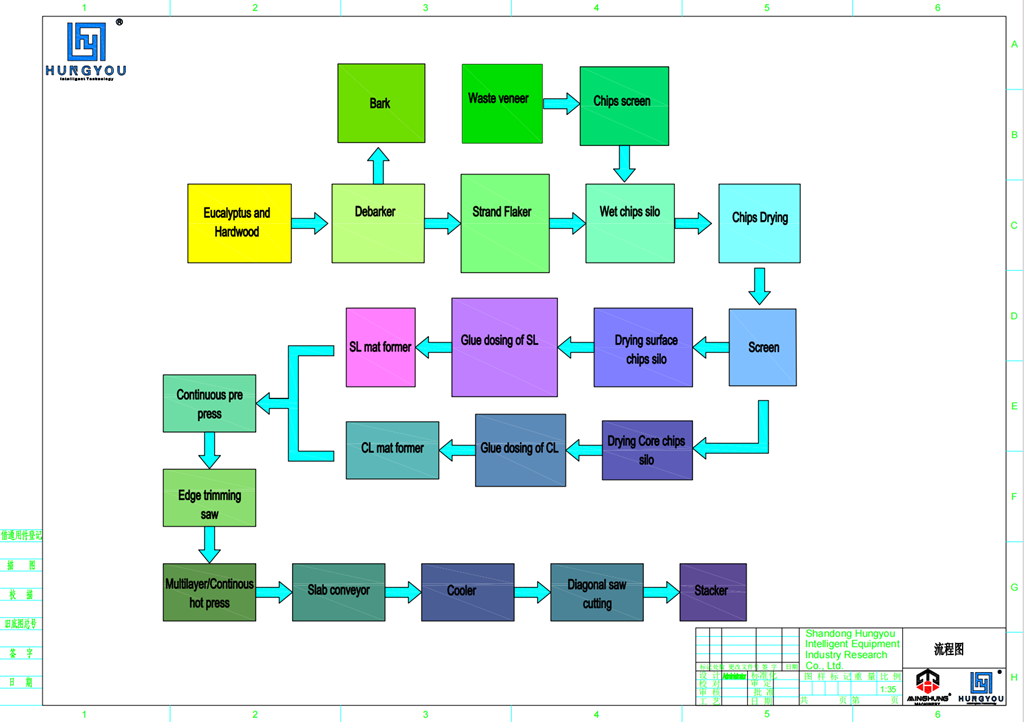
OSB production equipment and process

Plywood production equipment and process