Views: 55 Author: Site Editor Publish Time: 27-05-2026 Origin: Site
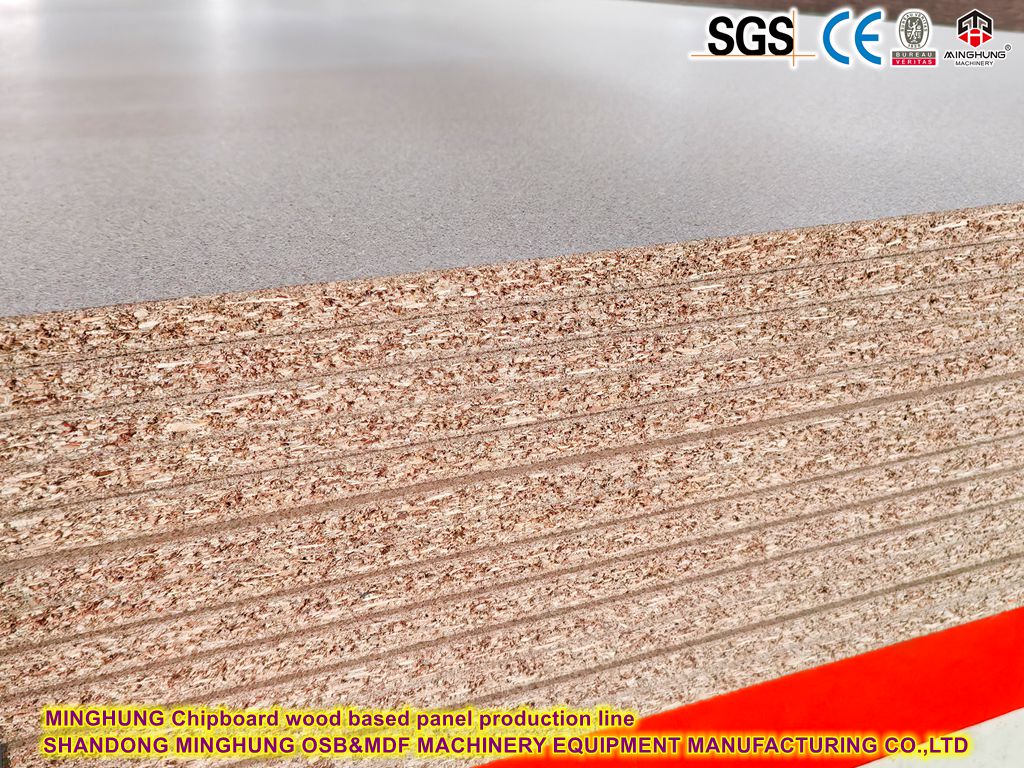
Chipboard is a versatile engineered wood product created by compressing wood particles with synthetic resin under high heat and pressure, offering a cost-effective and uniform alternative to solid lumber for furniture, construction, and interior design applications.
This article provides a comprehensive overview of the material, its production technology, and why it remains a top choice for global manufacturers. Whether you are optimizing a facility or sourcing raw materials, the information below will help you understand the structural properties and commercial advantages of this indispensable product.
Section | Summary |
What is a Chipboard? | Defines chipboard as an engineered wood composite and explains its common usage in modern industry. |
How is a Chipboard Made? | Details the technical process involving raw material preparation and the use of specialized machinery. |
What is the Thickness of a Chipboard? | Discusses standard thickness variations and the importance of precision in board manufacturing. |
What are the Different Types of Chipboard? | Explores classifications based on density, moisture resistance, and surface finish. |
What are the Benefits of Chipboard? | Highlights advantages like cost-efficiency, uniformity, and sustainable resource utilization. |
Chipboard is an engineered wood composite panel manufactured by binding wood chips, sawmill shavings, or wood flakes with a synthetic resin adhesive under high-pressure thermal compression.
At its core, chipboard serves as a fundamental material in the furniture and cabinetry industry. Unlike solid wood, which is prone to warping, shrinking, and inconsistent grain patterns, chipboard offers a stable and isotropic material profile. This makes it an ideal substrate for lamination, veneer application, and decorative finishes, providing designers with a smooth surface that is easily processed into functional items like office desks, shelves, and modular kitchen units.
The production of high-quality panels relies heavily on the efficiency of the advanced wood-based panel manufacturing line. Because the internal structure is composed of compacted wood fragments, the material is prized for its ability to be cut, drilled, and milled into precise specifications without the risk of splitting, which is a common issue with natural timber.
Furthermore, because it is engineered, manufacturers can control the density and mechanical properties of the board during production. This flexibility is a significant driver of its widespread adoption. By managing the ratio of wood particles to resin, producers can tailor the boards for specific interior environments, ensuring that the end-product meets both the aesthetic and structural requirements of modern residential and commercial projects.
Chipboard is produced through a controlled industrial process that involves wood preparation, resin blending, mat forming, and high-temperature press consolidation within an automated system.
The journey of transforming raw wood residues into a structural panel is a feat of modern engineering. It begins with the reduction of wood waste into uniform chips, which are dried to a specific moisture content. Once prepared, these particles are mixed with synthetic resins and additives to improve properties like water repellency or fire retardancy. For a deeper understanding of this process, you can refer to this thorough overview of panel production techniques.
The next critical phase is the mat-forming stage. The resin-coated particles are spread into a consistent mat and moved through a heated press. It is here that the automated chipboard production line ensures that the board attains its final thickness and density. The pressure applied during this stage is crucial, as it forces the resin to cure, creating a rigid and durable bond between the individual wood particles.
After the boards exit the press, they undergo cooling, sanding, and quality testing. Sanding is particularly vital, as it ensures the panels achieve the precise thickness required for subsequent laminating or surface decoration. This entire sequence is managed by sophisticated software and machinery that monitor the output quality, ensuring that every batch meets global standards for structural performance and surface smoothness.
Chipboard is manufactured in a wide variety of standard thicknesses, typically ranging from 3mm to 40mm, to accommodate diverse structural and aesthetic needs in furniture and construction.
The selection of thickness is a critical decision in product design. Thinner boards, often between 3mm and 9mm, are primarily used for drawer bottoms, back panels, or decorative wall cladding where strength requirements are minimal. Conversely, thicker panels, ranging from 18mm up to 40mm, are used for load-bearing applications, such as table tops, heavy-duty shelving, and cabinet carcass components, where structural rigidity and screw-holding capacity are essential.
To maintain these precise dimensions, a high-performance chipboard manufacturing line employs automatic thickness gauges and laser sensors. Any deviation in thickness can lead to significant issues during furniture assembly, such as misaligned joints or weak structural connections. Therefore, manufacturers prioritize consistent thickness across the entire width of the board.
In addition to standard sizing, bespoke thickness options can be achieved by adjusting the forming machine settings. This level of customization allows furniture manufacturers to optimize their designs, reducing material waste by selecting the exact thickness required for the specific stress loads of their products. Detailed guidance on selecting the appropriate panel for specific use-cases can be found in our expert guide to production specifications.
Chipboard types are primarily classified by their density, moisture-resistant additives, and the nature of their surface finish, such as melamine, veneer, or raw particleboard.
The diversity of chipboard allows it to serve various environments. To help users navigate these options, the following table summarizes the most common classifications based on application and material characteristics:
Type | Characteristics | Primary Use Case |
Standard Particleboard | Economical, uniform density | General furniture, office desks |
Moisture-Resistant Board | Contains water-repellent resins | Kitchen units, bathroom vanities |
Fire-Retardant Board | Treated with chemicals | Public buildings, commercial fit-outs |
Laminated/Melamine Board | Pre-finished surface | Decorative shelving, cabinets |
Beyond these categories, density also plays a major role. Low-density boards provide lightweight solutions but have lower structural integrity, while high-density particleboards are much sturdier and capable of supporting heavier loads. The choice between these types depends largely on the intended environment and the expected load on the furniture component.
The primary benefits of chipboard include its exceptional cost-efficiency, high design flexibility through surface finishing, and its contribution to environmental sustainability by utilizing wood waste.
Manufacturers and designers continue to rely on this material for several compelling reasons:
Cost-Effectiveness: Because chipboard is made from sawmill residues and wood chips, it is significantly cheaper to produce than solid lumber, making it the preferred choice for mass-market furniture.
Uniformity: The engineered nature of the product means it has no natural knots or grain irregularities, ensuring consistent cutting and assembly processes.
Versatility in Finishing: The flat, smooth surface is an excellent substrate for decorative veneers, melamine papers, and high-pressure laminates, allowing for endless aesthetic possibilities.
Sustainability: By repurposing wood waste that would otherwise be discarded or incinerated, the production of these panels supports a more circular economy in the timber industry.
In summary, chipboard remains an essential material in the modern industrial landscape. Its ability to be engineered for specific uses, combined with the efficiency of modern production technology, ensures its continued relevance as a foundational product for furniture and interior design projects globally.