
Views: 0 Author: Site Editor Publish Time: 18-11-2026 Origin: Site
Why does OSB deliver reliable strength despite being made from wood strands? Oriented Strand Board (OSB) is an engineered panel created by bonding wood strands under heat and pressure. Unlike particleboard, OSB uses longer strands arranged in cross-oriented layers to improve structural performance. This structure makes it suitable for construction, furniture manufacturing, and industrial packaging. An OSB Production Line transforms raw wood into consistent panels through several controlled manufacturing stages. Each stage influences bonding strength, dimensional stability, and overall panel quality. Understanding this process helps manufacturers identify critical production factors and achieve reliable results.
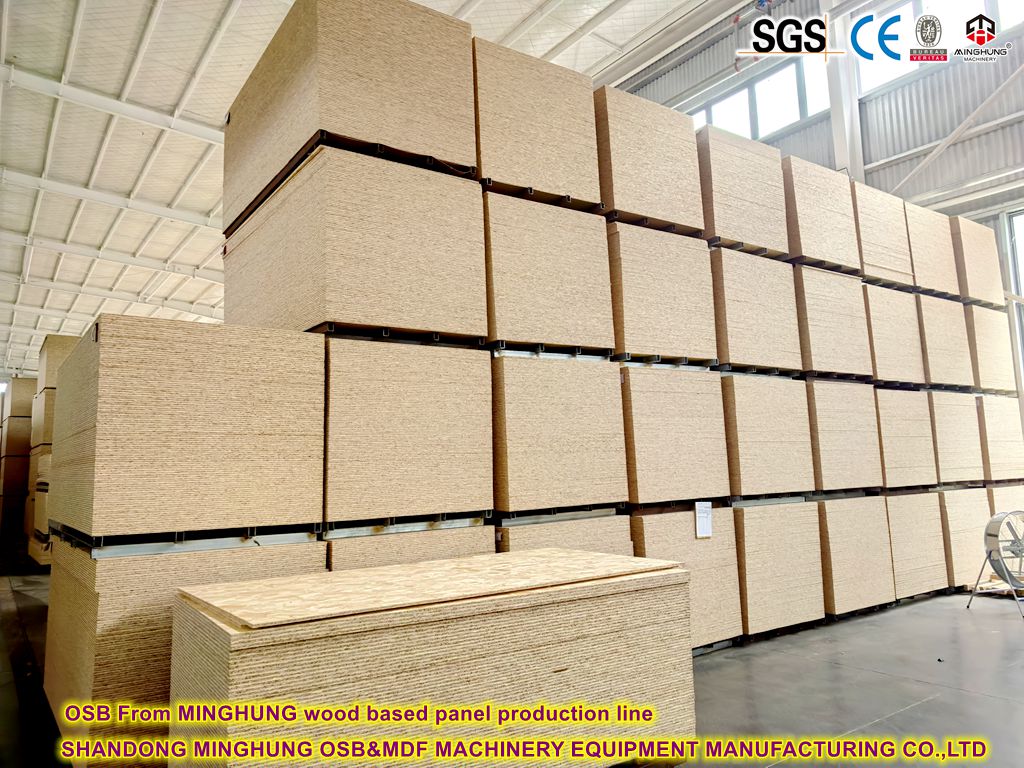
OSB gets its strength from the arrangement of wood strands inside each panel. Manufacturers control strand direction, adhesive bonding, and density to achieve specific performance requirements. These factors determine how effectively the board handles loads and changes in moisture.
Most OSB panels contain three main layers of wood strands. The outer layers usually run parallel to the panel's length. Meanwhile, the middle layer generally runs across that direction. This arrangement helps distribute loads throughout the panel. It also reduces some dimensional changes caused by wood movement.
Strand direction has a direct influence on bending performance. Panels generally resist bending more effectively along their major strength axis. However, their strength may differ across the opposite direction. This directional behavior matters when installing structural panels. Builders must follow the panel's specified span direction and installation requirements.
OSB also differs from ordinary particleboard in its internal structure. Particleboard generally contains smaller wood particles without deliberate strand orientation. OSB uses longer strands to create a more controlled structural arrangement.

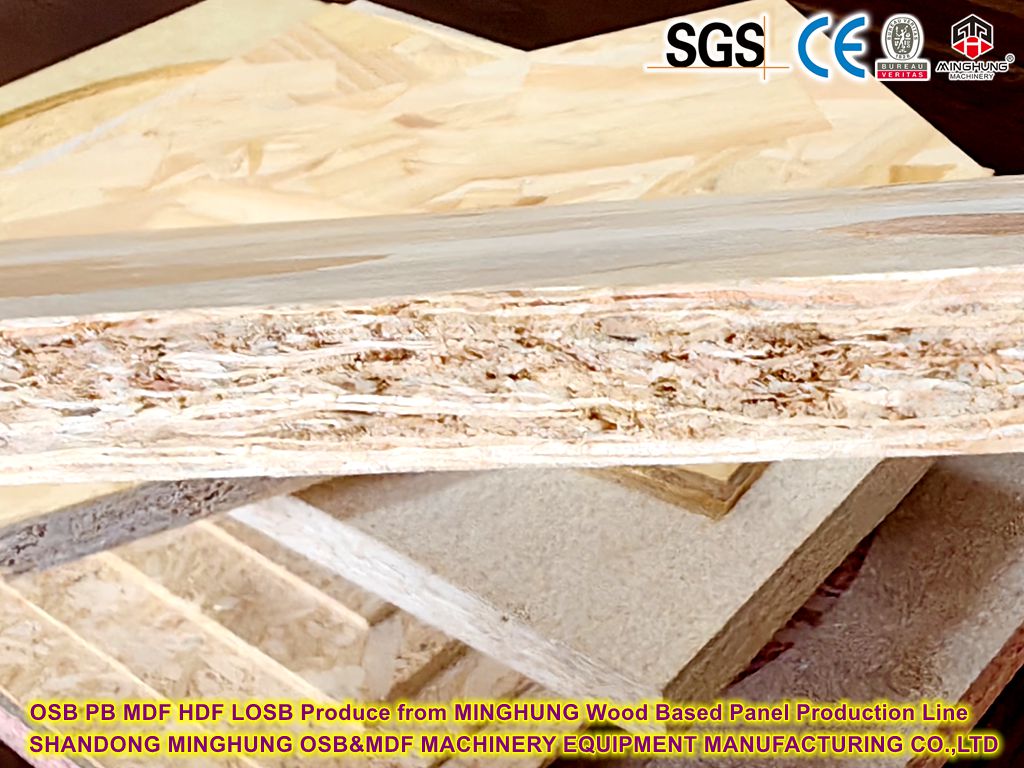
Wood strands cannot form a durable panel without effective bonding. Manufacturers apply specialized adhesives before pressing the material into a solid board. Phenol-formaldehyde (PF) and polymeric methylene diphenyl diisocyanate (pMDI) are common adhesive options. Both can support strong bonding when manufacturers follow suitable processing conditions. Panel density also influences structural performance. Greater density can improve certain mechanical properties, although higher density also increases weight.
However, uniform density matters as much as the overall density value. Uneven compression may create weak areas or inconsistent thickness. Manufacturers must balance density, adhesive content, and strand arrangement. This balance helps them produce panels suited to different applications.
Raw material preparation determines whether later production stages operate consistently. Poor strand quality cannot always be corrected through additional adhesive or pressing. An effective OSB manufacturing process therefore begins with careful wood selection and controlled strand preparation.


Manufacturers commonly use pine, poplar, spruce, and other suitable wood species. Their selection depends on regional availability, processing characteristics, and required panel properties. Logs first pass through debarking equipment to remove bark and unwanted surface materials. Clean logs then enter specialized stranding machines.
These machines cut wood into long, relatively thin strands. Their dimensions influence strand orientation, adhesive coverage, and panel strength. One equipment specification describes strands measuring approximately 50–100 mm long and 10–30 mm wide. Thickness may range around 0.5–0.8 mm in that example. These values are examples rather than universal production requirements. Actual dimensions depend on equipment settings and panel specifications.
Strands should remain reasonably consistent throughout production. Excessive breakage creates smaller particles and reduces orientation accuracy. Manufacturers also monitor log condition and moisture before processing. These factors influence cutting quality and the amount of drying required.
Fresh wood strands usually contain too much moisture for reliable adhesive bonding. They must undergo controlled drying before resin application. Rotary drum dryers and other industrial drying systems remove excess moisture. Operators adjust drying conditions according to incoming material characteristics.
Excessive moisture can interfere with adhesive curing and pressing. However, overdrying may damage strands or create additional processing problems. After drying, screening equipment separates materials according to their size and suitability. Larger strands can be directed toward the panel's outer layers.
Smaller suitable strands may be used within the core. Excessive fines and damaged material should be controlled or removed. Consistent screening helps maintain the intended layered structure. It also supports more predictable resin consumption and panel quality.
OSB dryer system
After preparation, dried strands enter the main panel-forming stages. These operations transform loose wood material into a bonded structural panel. The process involves adhesive application, directional mat formation, and controlled pressing. Each stage must work correctly before the next operation begins.
Dried strands enter blending equipment, where adhesive is distributed across their surfaces. Rotating blenders and spraying systems help achieve consistent coverage. The adhesive must reach enough contact points between neighboring strands. Poor distribution can create weak bonds even when resin consumption appears sufficient.
Manufacturers select resin systems according to panel requirements and processing conditions. PF adhesives offer moisture-resistant bonding after proper curing. pMDI adhesives provide another option for structural wood panels. Their use requires appropriate handling and equipment controls.
Some formulations also include paraffin wax to improve water repellency. However, wax does not make OSB completely waterproof. Resin dosage requires careful control throughout production. Too little adhesive can weaken internal bonding. Excessive application increases manufacturing costs without guaranteeing better results. Operators therefore coordinate resin application, strand moisture, and pressing conditions. This coordination helps produce consistent bonding across the panel.

After blending, strands enter the forming section. Specialized orienting equipment arranges them into a layered mat.
A typical three-layer structure follows this arrangement:
Bottom Face Layer: Strands align mainly along the panel's length.
Core Layer: Strands generally run across the outer-layer direction.
Top Face Layer: Strands follow the main direction of the bottom layer.
This cross-oriented structure improves the panel's mechanical behavior. It also helps manufacturers control strength across different directions. Forming equipment must distribute strands evenly across the moving conveyor. Uneven distribution can create areas containing too much or too little material.
Such variations affect panel density and thickness after pressing. They may also reduce bending performance in specific locations. Manufacturers therefore monitor layer weight, strand direction, and material distribution. Accurate forming prepares the mat for successful consolidation.
The loose mat contains spaces between individual strands. Pre-pressing reduces its thickness and makes it easier to transport. This operation also improves mat stability before final pressing. However, pre-pressing does not complete the adhesive curing process. The compacted mat then enters a hot press. Heat and pressure compress the strands while curing the adhesive.
Two common pressing arrangements are available.
Multi-Opening Hot Presses: Several mats can be pressed during each production cycle.
Continuous Presses: The forming mat moves through a pressing system without separate batch cycles.
Both systems require coordinated control of temperature, pressure, and pressing time. The correct settings depend on resin chemistry and panel characteristics. For reference, industrial OSB pressing temperatures can fall around 177–204°C. Actual production settings must follow the selected equipment and adhesive requirements. Insufficient pressing may leave weak internal bonds. Excessive compression can increase density and waste energy. Successful pressing produces a consolidated panel with controlled thickness and bonding.
minghung osb multi-layer hot press
minghung continuous flat press for osb
OSB Manufacturing Process Overview
Log Selection and Debarking
Stranding, Drying, and Screening
Resin Blending and Strand Orientation
Mat Formation and Pre-Pressing
Hot-Pressing and Adhesive Curing
Cooling, Cutting, and Quality Inspection

Hot-pressing creates the panel's main structure, but manufacturing does not end there. Panels still require finishing and inspection before entering the market. These final operations ensure suitable dimensions, surface conditions, and mechanical performance.
Freshly pressed panels retain considerable heat from the pressing operation. Controlled cooling allows them to stabilize before further handling. Without suitable cooling, internal temperature differences may contribute to unwanted panel movement. Manufacturers therefore use cooling and handling systems suited to their production conditions.
Panels then move through trimming equipment to achieve their required dimensions. A common commercial format measures approximately 1220 × 2440 mm. Other dimensions can be produced according to equipment capabilities and market requirements.
Some products require sanding to improve surface uniformity. Others retain their original pressed surface, depending on the intended application. Certain flooring panels also receive tongue-and-groove edge profiles. These features help adjoining boards fit during installation.
Finished panels require testing beyond simple visual inspection. A smooth appearance does not guarantee suitable structural performance.
Manufacturers commonly examine several important characteristics:
Thickness and Dimensions: Confirm consistency against manufacturing tolerances.
Density and Moisture Content: Check material uniformity and storage suitability.
Bending Strength: Evaluate resistance to loads under specified testing conditions.
Internal Bond Strength: Assess bonding quality between wood strands.
Thickness Swelling: Measure dimensional changes following defined moisture exposure tests.
Testing methods should follow the intended market's applicable standards. Results must also match the panel's declared grade and application. For example, structural flooring panels require different performance considerations from decorative furniture components. Regular testing helps manufacturers detect production changes before defective panels reach customers.
Even well-designed manufacturing systems can experience production defects. Most problems involve material inconsistency, bonding conditions, or pressing control.
Identifying the underlying cause is more useful than simply rejecting defective panels. Manufacturers should connect inspection results to measurable production conditions.
Uneven density often begins during mat formation. Poor strand distribution creates areas containing different amounts of material. These variations become more noticeable after pressing. Some areas may become excessively dense while others remain weak. Poor bonding presents another common manufacturing challenge. It may result from uneven resin coverage or unsuitable curing conditions.
Moisture differences can also interfere with adhesive performance. Therefore, operators must monitor several stages rather than adjusting pressing alone. Thickness variation may develop from inconsistent mat weight or press settings. Equipment wear and calibration problems can contribute to these defects. Manufacturers can reduce these risks through regular process checks. Important controls include strand screening, resin application, mat weight, and press calibration.
OSB contains natural wood, which responds to moisture exposure. Its thickness can increase when wood strands absorb water. Moisture-resistant formulations help reduce this behavior. However, they cannot eliminate every effect of prolonged exposure.
Poor adhesive distribution or unsuitable processing conditions may worsen swelling performance. Manufacturers must evaluate these factors using standardized tests. Surface defects can also develop during production. Excessive fines, uneven forming, and damaged strands may create visible irregularities.
The following table connects common defects to possible manufacturing causes.
Production Problem | Possible Cause | Recommended Control |
Poor internal bonding | Uneven resin coverage or insufficient curing | Check blending and pressing conditions |
Uneven panel density | Inconsistent strand distribution | Monitor mat formation |
Thickness variation | Uneven mat weight or press settings | Calibrate forming and pressing equipment |
Excessive swelling | Unsuitable bonding or moisture control | Review resin selection and moisture conditions |
Surface irregularities | Damaged strands or excessive fines | Improve screening and material handling |
Operators should investigate repeated problems using recorded production data. This approach makes corrective actions more reliable and reduces unnecessary material waste.
Selecting manufacturing equipment requires more than comparing machine prices or advertised output. Each production stage must support the intended panel specifications. Manufacturers should first identify their required panel thicknesses, dimensions, grades, and production capacity.
These requirements determine suitable equipment configurations. Raw material characteristics also influence the manufacturing system. Different wood species and moisture conditions may require adjustments in stranding and drying. Production balance is equally important. A high-capacity press provides limited benefits when earlier stages cannot supply enough prepared strands.
When evaluating an OSB Production Line, manufacturers should consider several practical factors:
Production Capacity: Match equipment output to realistic manufacturing demand.
Equipment Compatibility: Coordinate stranding, drying, blending, forming, and pressing systems.
Process Control: Monitor moisture, adhesive dosage, mat weight, and pressing conditions.
Energy Efficiency: Evaluate drying requirements, heating systems, and operating costs.
Maintenance Access: Allow safe inspection, servicing, and replacement of equipment components.
Quality Requirements: Confirm equipment suitability for the intended panel grades.
Automated monitoring can improve consistency and reduce manual adjustment requirements. However, automation must support the actual manufacturing process. Dust collection and safe material handling also deserve attention. They affect workplace conditions, equipment reliability, and operational safety.
At MINGHUNG, we offer OSB manufacturing equipment, including our MH-OSB300 model. Our equipment range supports key stages of the panel production process. The best configuration depends on actual production requirements rather than one standard design. Manufacturers should request technical specifications and confirm equipment capabilities before investing.
OSB performance depends on strand geometry, orientation, adhesive bonding, moisture control, and pressing conditions. Each factor contributes to panel strength, stability, and overall quality. Consistent manufacturing requires careful control from wood preparation through final inspection. Manufacturers should define panel specifications and quality requirements before selecting production equipment. At Shandong MINGHUNG OSB&MDF Machinery Equipment Manufacturing Co., Ltd., we provide OSB production equipment for efficient panel manufacturing. Our OSB Production Line supports coordinated processing, helping manufacturers improve production consistency and maintain reliable panel quality. We help customers select suitable equipment configurations based on their production needs.
A: An OSB Production Line converts wood logs into engineered panels through stranding, drying, resin blending, mat forming, and hot pressing. It supports consistent manufacturing for construction, furniture, and packaging applications.
A: An OSB Production Line prepares and dries wood strands before applying adhesive. The strands form cross-oriented layers, which are pressed under heat and pressure to create strong panels.
A: Cross-oriented wood strands improve bending strength and dimensional stability. The outer layers typically align lengthwise, while core strands run across them, creating a balanced structural panel.
A: The cost of an OSB Production Line depends on production capacity, equipment configuration, press type, automation, and energy requirements. Manufacturers should also consider installation and maintenance expenses.
A: OSB uses longer, directionally arranged wood strands, while particleboard contains smaller, generally unoriented particles. OSB's layered structure provides directional strength suitable for many structural applications.
Our contacts:
Whatsapp: +8618769900191 +8615589105786 +8619953910191
Email: osbmdfmachinery@gmail.com


 Screening Wood Strands machine


