Views: 0 Author: Site Editor Publish Time: 21-07-2026 Origin: Site


A hot press machine is a high-precision industrial system used to permanently bond, laminate, shape, or cure diverse materials by simultaneously applying controlled heat and heavy hydraulic or mechanical pressure. This dual-action process forces layers together, activates thermosetting resins or adhesives, compresses structural fibers, and eliminates air voids to create flawless, high-strength composite panels, electronic assemblies, and automotive components.
Section |
Summary |
How a Hot Press Achieves Precision |
Details the operational mechanics where synchronized thermal energy and uniform tonnage integrate to secure flawless bonding without structural distortion. |
Key Structural Components |
Outlines the heavy-duty engineering architecture including rigid frames, advanced platens, fluid power systems, and automated microprocessors. |
Understanding the Trade-offs |
Examines the critical design considerations balanced by engineers including custom sizing, strict tolerance management, and system maintenance complexity. |
Making the Right Choice for Your Goal |
Provides a strategic guide for evaluating production volume, materials, and automation levels to select the ideal machinery configuration. |
A hot press machine achieves precision by executing a perfectly synchronized thermal-mechanical cycle that ensures uniform material densification, precise adhesive activation, and absolute dimensional stability across the entire processing surface. Industrial manufacturing demands absolute consistency. When raw substrates, resins, or composite mats are introduced to the pressing chamber, any minor deviation in temperature or pressure distribution will result in delamination, warping, internal gas pockets, or structural weak points. The hot press eliminates these risks by utilizing closed-loop feedback mechanisms that actively monitor and adjust the physical environment inside the press chamber in real time, ensuring that the target material undergoes a homogeneous physical and chemical transformation.
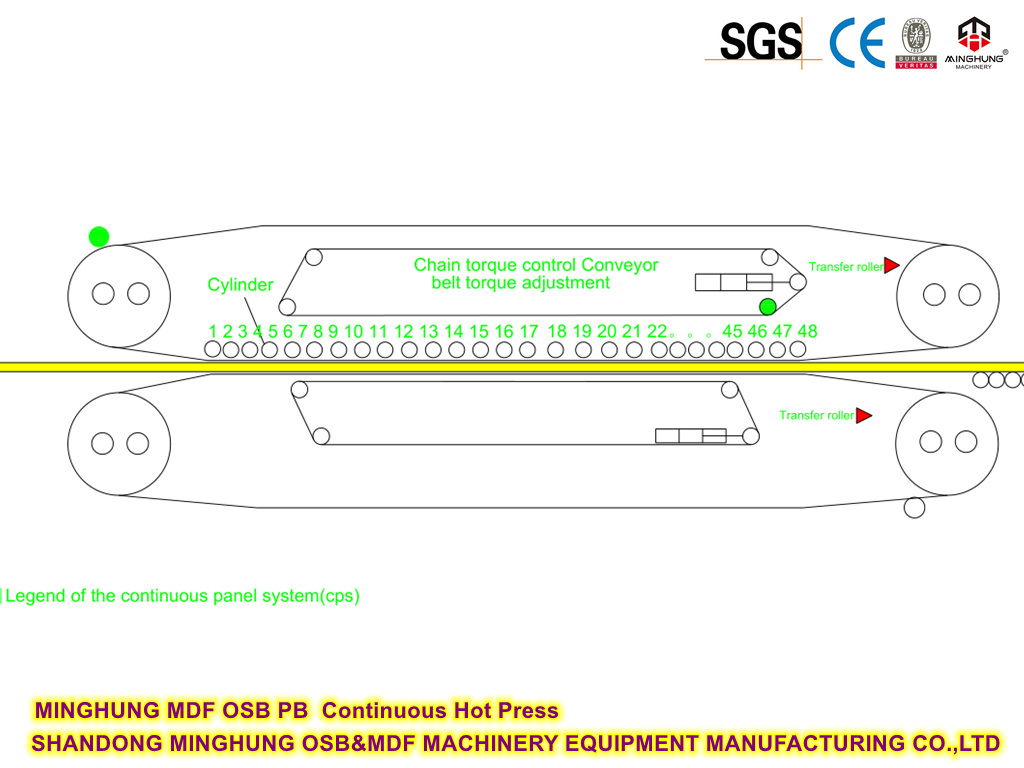
Modern industrial production increasingly relies on continuous manufacturing lines to optimize throughput and cost-efficiency. In the production of composite boards, implementing a high-capacity continuous hot press machine allows for an uninterrupted workflow where materials are constantly fed, compressed, heated, and discharged, maximizing output while maintaining rigorous quality standards.
The interaction between the thermal energy and the mechanical force must be carefully tailored to the specific rheological properties of the material being processed. Whether curing advanced polymer matrices, bonding decorative wood veneers, or consolidating structural biomass fibers, the press must maintain its configured settings throughout the entire compression cycle to ensure complete material integration.
The fundamental principle behind this technology relies on the simultaneous application of intense thermal energy and high-tonnage mechanical force to alter the physical state of the workpiece. When heat is applied, it lowers the viscosity of adhesives or polymers, causing them to flow fluidly into the micro-microscopic pores of the structural substrates. Simultaneously, the crushing force ensures absolute contact, driving out trapped air and compressing the material core to its target density before the adhesive cures or the resin polymerizes.
The heating system is engineered to deliver rapid, uniform thermal transfer across the entire working area. Industrial machines utilize various heating media, including circulated thermal oil, high-pressure steam, or electric resistance elements embedded deep within the platens. For rapid-cycle applications, pulse heating technologies allow for lightning-fast temperature ramping and cooling, ensuring that materials are not subjected to prolonged thermal stress that could degrade their structural integrity.
The pressure delivery system utilizes heavy-duty hydraulic rams or precision servo-driven mechanical actuators to exert massive, repeatable tonnage. The pressure must be distributed evenly across every square millimeter of the platen surface to prevent localized thickness variations. Advanced hydraulic circuits use proportional valves to gradually ramp up pressure, hold it steady during the critical curing phase, and then vent it in a controlled manner to prevent sudden decompression shocks.
At the heart of precision pressing is the digital control system, typically managed by advanced Programmable Logic Controllers (PLCs) paired with intuitive human-machine interfaces (HMIs). These systems integrate multi-channel sensor arrays that constantly track platen temperature, applied tonnage, hydraulic fluid status, and platen displacement down to the micron. This deep data integration allows for automated recipe management, comprehensive quality logging, and immediate error detection during active production runs.
Parameter Category |
Specification / Standard |
Impact on Precision |
Temperature Uniformity |
Compliance within 1 Degree Celsius |
Prevents localized over-curing or under-bonding |
Pressure Tolerance |
Variation under 0.5 Percent of Target |
Insures uniform density and board thickness |
Parallelism Control |
Deviation less than 0.05 mm per Meter |
Eliminates wedging and uneven material compression |
Displacement Resolution |
Micro-level Monitoring (0.01 mm) |
Guarantees exact final product thickness profiles |

The key structural components of a hot press machine consist of a high-rigidity frame, precision-machined heated platens, robust hydraulic or electronic actuators, and intelligent automation systems working together to withstand immense mechanical stresses while maintaining perfect alignment.
The operational integrity of a press depends entirely on the robust engineering of its structural framework. When a machine exerts hundreds or thousands of tons of force while operating at elevated temperatures, the internal structural stresses are extreme. If the framework experiences even minor structural deflection or thermal distortion, the alignment of the pressing surfaces will fail, leading to uneven product thickness, accelerated component wear, and catastrophic sealing failures.
To achieve long-term durability in punishing heavy-industrial environments, manufacturers utilize heavy-duty, stress-relieved steel plates and structural box beams to construct the machine chassis. Every structural junction is precision welded or bolted using high-tensile fasteners, creating an uncompromising, rigid cage that keeps all moving parts in perfect alignment under full load conditions.
This structural permanence is critical when dealing with advanced wood-processing lines. For instance, in high-output OSB production plants, utilizing a specialized OSB continuous press system provides the immense structural rigidity and long-zone pressing capabilities required to cure thick, multi-layered strand mats into uniform structural panels.
The frame serves as the rigid skeleton of the machine, typically configured in an H-frame, four-column, or modular multi-frame design depending on the scale of operation. The platens are the heavy, thick steel plates that make direct contact with the product or mold assemblies. These platens are crafted from specialized, high-thermal-conductivity forged steel, drilled with intricate internal labyrinth channels to optimize the circulation of heating fluids and ensure an absolutely flat, unyielding pressing surface.
The mechanical force required for compression is generated by the primary drive actuators, which are driven by a high-efficiency hydraulic power pack or an array of heavy-duty electro-mechanical servo drives. Hydraulic systems utilize large-diameter, hard-chrome plated cylinders equipped with high-performance polyurethane seals to prevent fluid leaks under high pressure. The power pack includes variable-frequency pumps and multi-stage filtration units to ensure smooth, clean, energy-efficient fluid transmission.
The user interface acts as the central command post, linking the human operator to the automated machinery. Modern interfaces feature high-resolution industrial touchscreens displaying real-time graphical representations of the press cycle, thermal curves, and hydraulic pressure profiles. The automation architecture includes safety interlocks, light curtains, emergency stop circuits, and remote diagnostic modules that allow engineers to perform off-site troubleshooting and software optimization.
Component Part |
Material Composition |
Primary Engineering Function |
Machine Frame |
High-tensile Q345B Steel Structural Plate |
Resists structural deflection under maximum tonnage |
Pressing Platens |
Forged Alloy Steel with Precision Gun-Drilling |
Delivers uniform heat transfer and flat compression |
Hydraulic Cylinders |
45-Grade Steel with Hard Chrome Plating |
Converts fluid pressure into linear mechanical force |
Thermal Insulation Plates |
High-density Fiberglass or Ceramic Composites |
Prevents heat migration from platens to the frame |

Understanding the trade-offs of hot press machinery involves balancing high-speed production capability and extreme structural precision against increased capital investment, system complexity, and rigorous preventative maintenance demands.
Every industrial manufacturing system requires a carefully calculated balance between capital expenditure, structural versatility, and operating costs. A machine engineered to deliver ultra-high tonnage and extreme thermal accuracy will naturally incorporate highly complex hydraulic circuits, sophisticated electronic control networks, and premium-grade materials. This complexity delivers unmatched product quality, but it also increases the technical expertise required for operational oversight and routine maintenance.
Furthermore, a machine optimized for a specific high-volume production line may lack the flexibility to rapidly switch between completely different product dimensions or material chemistries. Manufacturers must evaluate whether their long-term operational goals favor a highly specialized, ultra-fast continuous production system or a more flexible, multi-opening batch press that can handle a broader variety of smaller product runs.
In the global wood-based panel industry, this trade-off is clearly visible when evaluating processing line designs. Investing in a robust continuous hot press line for composite panels represents a significant initial capital investment and requires strict operational discipline, yet it drastically reduces long-term labor costs, minimizes material waste, and yields a superior, highly uniform product that batch presses cannot easily match.
Designing a press for a unique industrial application requires careful prioritization of certain performance metrics over others. For example, a machine built for lightweight automotive composites might prioritize rapid cooling cycles and complex multi-directional pressing axes, whereas a machine built for structural timber laminates will focus primarily on long dwell times and massive, sustained vertical tonnage. Attempting to force a machine out of its core design envelope leads to decreased efficiency and accelerated component fatigue.
As tolerance specifications tighten, the cost and complexity of the machine scale exponentially. Achieving sub-micron thickness tolerances requires the integration of expensive linear encoders, dynamic active parallel leveling systems, and ultra-precise proportional hydraulic valves. While this high level of precision is mandatory for technical fields like electronics laminating or aerospace component molding, it adds unnecessary cost and complexity for standard industrial packaging or basic laminating operations.
The integration of advanced thermal systems, high-pressure hydraulics, and digital automation creates an interdependent environment where a failure in one minor sensor can halt the entire production line. Operators must be prepared to invest in ongoing technical training for their maintenance personnel and establish strong working relationships with equipment manufacturers to ensure a reliable supply of critical spare parts and access to expert remote technical support.
Operational Benefit |
Associated Engineering Trade-off |
Long-term Plant Management Impact |
Ultra-high Production Speed |
Increased Initial Capital Outlay |
Requires high-volume raw material feed supply lines |
Extreme Thermal Accuracy |
Complex Multi-zone Heating Control |
Higher energy consumption and detailed sensor calibration |
Advanced Digital Automation |
Increased Equipment Complexity |
Requires skilled technical operators and software updates |
Compact Footprint Design |
Intensive Localized Mechanical Loadings |
Mandates reinforced concrete foundation foundations |
Making the right choice for your goal requires an exhaustive analysis of your material specifications, target daily output volumes, exact dimensional tolerances, and available factory infrastructure to select a press system that maximizes return on investment.
Selecting the ideal industrial press configuration is a multi-layered decision-making process that dictates the profitability and efficiency of a production facility for decades. The process begins with a deep dive into the physical properties of the target product. Plant managers must calculate the exact pressure per square centimeter required to properly compress and bond their specific material mix, alongside the precise thermal energy curve needed to complete the curing cycle without damaging the substrates.
Beyond the immediate material requirements, long-term production forecasting is essential. A facility must choose a machinery platform that not only meets current market demand but also allows room for scaling production or adapting to future material innovations. This strategic planning ensures the machinery asset remains a highly productive and profitable core component of the business.
For high-volume panel manufacturing facilities, integrating an advanced OSB continuous press machine into the layout provides a clear path to market leadership by combining automated material handling, continuous processing efficiency, and exceptional structural consistency into a single, highly optimized manufacturing asset.
Define Comprehensive Material Processing Profiles: Document all physical attributes of the raw inputs, including adhesive curing speeds, maximum moisture content, material dimensions, and target finished densities.
Calculate Required Tonnage and Thermal Capacity: Ensure the machine possesses a comfortable safety margin beyond the absolute maximum pressure and temperature required for your most demanding product lines.
Assess Plant Infrastructure and Utilities: Verify that the factory floor can support the static and dynamic weight distribution of the press, and that the electrical, gas, or steam utilities can deliver the required energy inputs.
Evaluate Automation and Labor Integration: Determine the optimal level of automation for your region, balancing the initial cost of robotic loading and unloading systems against long-term labor costs and safety considerations.
Analyze Total Cost of Ownership (TCO): Look beyond the purchase price to calculate energy efficiency ratings, expected maintenance schedules, consumable parts costs, and the estimated operational lifespan of the machinery.
Operational Maintenance Guideline: To guarantee the long-term reliability and accuracy of a hot press system, operators must implement a rigorous preventative maintenance schedule. Every week, technicians must inspect hydraulic fluid clarity and test for particulate contamination to protect precision proportional valves. Heated platens must be checked monthly using laser alignment tools to verify absolute flatness and surface parallelism, and all thermal sensors must undergo semi-annual calibration against certified standards to prevent undetected temperature drift across the pressing zones.


