loading
| Availability: | |
|---|---|
MH-PB
MINGHUNG

|
Product Description
We can customize in terms of production capacity, raw materials, products and automation.
 | 1. Customization of Production Capacity and Investment Scale |
This is the most fundamental level of customization, directly impacting the total investment and alignment with market demand.
Micro and Small-Scale Lines (Annual output: 10,000 - 50,000 cubic meters):
Target Clients: Start-ups, regional wood processors, producers focusing on niche markets (e.g., specialty boards, substrate for custom furniture).
Configuration Features: Typically employ multi-opening hot presses to lower initial investment. The layout is compact, with automation levels set for stable production, while providing interfaces for future upgrades. Ideal as a "pilot plant" or for processing specific local waste resources.
Medium-Scale Lines (Annual output: 50,000 - 150,000 cubic meters):
Target Clients: Existing manufacturers seeking capacity upgrades, investors targeting provincial or regional domestic markets.
Configuration Features: This is the most flexible range. Clients can choose between large multi-opening presses or entry-level continuous presses based on budget. It includes complete drying, forming, and finishing sections with a high degree of automation, enabling multi-product changeovers.
Large and Mega-Scale Lines (Annual output: 150,000 - 400,000+ cubic meters):
Target Clients: Industry leaders, large investment projects aimed at establishing national or export-oriented production bases.
Configuration Features: Standard configuration includes high-precision continuous presses, dual or multiple raw material preparation lines, fully automated intelligent logistics, and advanced Manufacturing Execution Systems (MES). The core pursuit is economies of scale,superlative efficiency, and product consistency, supplying standardized or premium boards to mass markets.
| 2. Deep Customization for Raw Material Adaptability |
The line's "appetite" determines its raw material cost advantage and sustainability.
Specialized Design for Wood Raw Materials:
For fast-growing species (e.g., poplar, eucalyptus) with soft wood, optimize the blade angle and clearance of flakers and grinders to increase the yield of qualified particles.
For hardwoods or recycled wood (e.g., used pallets, demolition timber), enhance the wear resistance of chippers, configure efficient metal detection and removal systems, and adjust drying curves to prevent cracking.
Integrated Solutions for Non-Wood Fibers:
Straw-based (rice/wheat straw, bagasse): Require dedicated pre-treatment equipment for cutting, dedusting, screening, and pre-steaming to remove sugars and silicates. Special glue application systems are designed to suit fibers with high surface energy.
Bamboo: Requires integration of specific bamboo fiberization equipment to break down its tubular structure for better bonding. The line must be designed to handle the higher abrasive wear of bamboo.
Mixed Raw Materials: Design flexible feeding and pre-treatment systems capable of handling blended wood and straw in specific ratios, ensuring year-round stable raw material supply.
| 3. Customization of the Final Product Portfolio |
The production line is the direct source of product competitiveness and must be capable of producing the boards demanded by the target market.
Density and Structure Customization:
Lightweight Board (Density: 450-550 kg/m³): Optimize the former to achieve a uniform, fluffy structure, using special adhesive formulations. Suitable for door cores, exhibition props, etc.
Standard Board (Density: 650-720 kg/m³): Configuration for general furniture board, balancing strength and cost.
High-Density Board / Reinforced Structural Board (Density: >750 kg/m³): Requires higher press pressure and unique graduated forming structure design for applications like countertops and floor underlayment.
Specification and Functional Customization:
Thickness Range: By change the thickness of the steel belt and adjusting forming programs, production can range from 2.5mm thin board to over 40mm ultra-thick board.
Special Function Boards:
Moisture/Water-Resistant Board: Integrate waterproofing agent application systems, potentially using MDI adhesive lines.
Fire-Retardant Board: Add processes for impregnating or adding flame retardants.
Low-Formaldehyde/No-Added-Formaldehyde Board: Configure dedicated preparation and application systems for E0-grade or NAF (No Added Formaldehyde) adhesives to meet standards like CARB, EPA, or F★★★★.
| 4. Customization of Automation and Intelligence Levels |
Offer "tiered" intelligent options based on the client's technical team capability and management goals.
Basic Automation Level: Implements automatic control and safety interlocking for individual machines, ensuring basic production stability. Suitable for regions with lower labor costs and experienced operators.
Process Optimization Level: Builds on the basic level by adding closed-loop automatic control for key process parameters (e.g., adjusting drying temperature based on online moisture meters) and equips a central monitoring system for centralized operation and data logging.
Smart Factory Level: This represents the advanced form of customization. It integrates a Manufacturing Execution System (MES) for end-to-end digital management from order release to finished product warehousing. It includes:
Recipe Management System: One-click changeover for different product parameters.
Predictive Maintenance System: Monitors equipment vibration and temperature via sensors to warn of potential failures.
Energy & Quality Traceability System: Analyzes the correlation between energy consumption and quality for each batch in real-time, enabling continuous optimization.
| 5. Customization of Spatial Layout and Future Expandability |
Compact Layout: Designed for clients with limited space, achieving full functionality within a minimal footprint through vertical layouts and optimized material flow paths.
Expandability Design:
Horizontal Expansion: Reserve space and interfaces during initial design for future addition of equipment like a second dryer or forming head.
Vertical Upgrade: For example, starting with a multi-opening press but building the foundation, hydraulic, and heat source systems to the standard required for a future upgrade to a continuous press, protecting the long-term investment.
|
Implementation Process for Customized Services
1. In-Depth Needs Analysis: Work collaboratively with the client to clarify capacity goals, raw material profile, product strategy, budget range, and long-term vision.
2. Process Scheme Design: Based on the needs analysis, produce detailed Process Flow Diagrams (PFDs), Material Balance Calculations, and Energy Balance Calculations to determine the technical route.
3. Modular Configuration and Selection: Like "building with blocks," select the most suitable model and specification for each section from the equipment portfolio, forming a preliminary equipment list.
4. Simulation and Feasibility Verification: Conduct computer simulations for critical processes to verify capacity and craft feasibility, providing a detailed Return on Investment (ROI) Analysis Report.
5. Detailed Design and Implementation: Complete 3D plant layout, civil engineering requirement drawings, electrical and automation design, proceeding to manufacturing, installation, and commissioning.
6. Lifetime Support and Iteration: Provide continuous technical support and, when the client requires future upgrades, offer convenient expansion or retrofit solutions based on the original modular design.
|
Core Production Sections

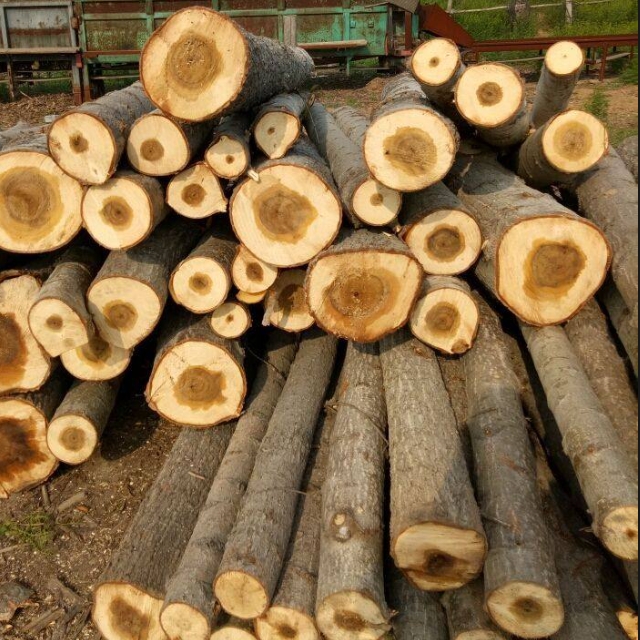
1. Raw Material Section: From Raw Materials to Qualified Particles
Core Task: Process raw materials of various forms into dried particles that meet the required size and shape specifications.
General Process: Raw Material → Chipping → Flaking/Grinding → Screening → Qualified Material Silo.
Core Equipment:
Chipper: Cuts logs, slab wood, etc., into uniform wood chips.
Flaker/Grinder: Processes wood chips into flakes (flakers) or granules (grinders).
Screening System: Vibrating screens classify particles by size—fine particles for the surface layer, coarse particles for the core layer. Oversized particles are sent back for re-crushing.
wood chipper machine
wood flaker machine
2. Drying Section: Precise Moisture Content Control
Core Task: Reduce the moisture content of particles from about 50% to 3-5%, creating stable conditions for glue blending and hot pressing.
General Equipment: Rotary Drum Dryer (commonly a three-pass type). Hot air fully contacts the particles inside the drum to evaporate moisture. It is equipped with a Thermal Energy Center (often fueled by process residues) to provide heat.
dryer system
energy center
3. Blending Section: Uniform Coating, Determining Environmental Performance
Core Task: Apply adhesive (e.g., UF resin, MDI) and additives (e.g., wax) precisely and uniformly onto the surface of the particles.
Core Equipment: High-Speed Ring Blender. Glue is atomized through nozzles and sprayed into the rapidly tumbling particles to achieve coating. The glue application accuracy must be controlled within ±1%.

4. Forming and Hot Pressing Section: From Loose Particles to Solid Board
This is the core transformation zone of the entire production line, determining the board's structure and fundamental properties.
Forming:
Core Task: Form the glue-coated particles into an even, structurally sound (typically a "fine-coarse-fine" three-layer) mat.
Core Equipment: Forming Machine (mechanical, air-felt, or combined type). It is the "brain" of the production line. Its precision directly determines the uniformity of board density and whether it will warp later.
Hot Pressing:
Core Task: Apply high temperature (180-220°C) and high pressure (2.5-4.0 MPa) to the mat, causing the adhesive to cure rapidly in a short time, forming a solid board.
Core Equipment: Hot Press. It is the "heart" of the production line. There are two main types:
Multi-Opening Hot Press: Intermittent production, lower investment, good flexibility.
Continuous Press: Continuous production, high efficiency, more uniform board quality. It is the mainstream choice for modern large-scale production.
mat forming machne
hot press machine
5. Finishing Section: From Rough Board to Commercial Product
Core Task: Calibrate the thickness, cut, and sand the rough board after hot pressing to turn it into a product with precise dimensions and a smooth surface.
Core Equipment:
Cooling and Turnover Unit: Cools and sets the high-temperature board to prevent deformation.
Cross-Cut and Trim Saws: Cut large panels into standard sizes.
Sanding Machine (Multi-head Wide-Belt): Key quality equipment. Eliminates thickness deviation and the pre-cured layer, providing a smooth surface with a tolerance of up to ±0.1mm.
Stacking and Packaging Line: Automated grading, stacking, and packaging.
dryer rack
cross-cut and trim saws
sander
|
Why Choose Our Customized Solution?
Precise Investment: Avoid overpaying for oversized capacity or functions you won’t use. Focus your capital on core value-creating areas.
Reduced Risk: A tailor-made solution fits your local raw material supply and sales reality, ensuring higher project success and ROI.
Future-Proof: Modular design protects your investment. When it’s time to expand or add new products, you won’t need to replace the entire line.
End-to-End Partnership: We are more than an equipment supplier; we are your technical partner. From project consultation, plant design, installation, and commissioning to ongoing support, we walk the journey with you.
|
Company Profile
Shandong MINGHUNG OSB&MDF Machinery Equipment Manufacturing Co.,Ltd. was founded in 1983, specializes in continuous press solutions for over 40 years.
MINGHUNG is a leading company in the industry of OSB&MDF making machine. With a strongfocus on producing high-quality machinery, we specialize in manufacturing thecomplete production line of Medium density fiberboard (MDF), High densityfiberboard (HDF),Particle board (PB), Oriented strand board (OSB) , Veneerable super strong particle board (LSB),Laminated board and veneer.


|
Workshop
|
Certifications
|
We make the delivery
Tell us about your goals, raw materials, and market plan. We will present you with a dedicated feasibility analysis and preliminary proposal.
Our contacts:
Whatsapp: +8618769900191 +8615589105786 +8618954906501
Email: osbmdfmachinery@gmail.com