MH-OSB
MINGHUNG
Core Design Philosophy: Raw Material Flexibility
The defining advantage of this production line is its exceptional adaptability to raw materials, designed to address industry pain points like unstable supply and high cost of single-species wood.
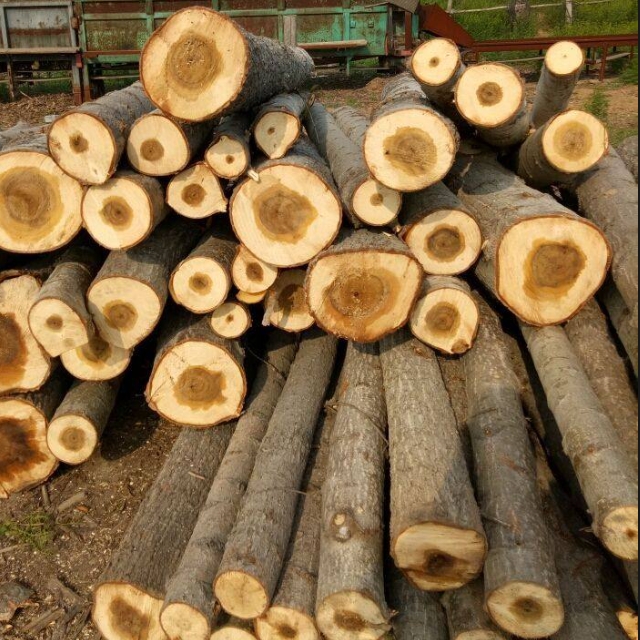
Broad Raw Material Compatibility: Efficiently processes mixed hardwoods and softwoods, such as pine, poplar, eucalyptus, and fir.
"Non-Picky" Raw Material Inventory: Capable of handling not only standard logs and small-diameter wood but also utilizing forestry and wood processing residues on a large scale, including branches, slabs, cores, sawdust, and even recycled timber and formwork.
Flexible Blending & Process Adjustment: The intelligent control system can automatically or semi-automatically adjust process parameters (e.g., strand size, drying temperature, resin dosage, press curve) in subsequent stages based on the real-time input of different wood species, moisture content, and dimensions. This ensures stable and consistent final board quality.
Production Equipment
The core of a production line suitable for mixed wood species lies in "pre-processing and sorting" and "flexible process control." Below is a detailed equipment list and technical points organized by production stages:
Phase One: Raw Material Handling and Preparation Section
The goal of this stage is to transform irregular raw materials into uniform, qualified strands.
1. Debarking and Washing Machine: Performs intensive cleaning and debarking of logs or residues containing soil and gravel. It protects downstream cutting tools and is the first critical piece of equipment for handling complex raw materials.

2. Long-Log Strander: A core piece of equipment in the production line. Machines from brands feature heavy-duty knife discs and powerful feed rollers. They can directly process mixed raw materials several meters long, with varying diameters, slight curvature, and knots, slicing them into strands with an ideal length-to-width ratio (typically 100-150mm in length).

3. Strand Screening and Re-Chip System:
Multi-layer Screening Deck: Precisely sorts strands by size into face layer fines, core layer coarse strands, oversized strands, and dust.
Ring Flaker/Dedicated Re-Chipper: Re-processes screened oversized strands and some disqualification material through secondary crushing instead of discarding them, increasing comprehensive raw material utilization to over 95%.
Intelligent Air Classification System: Uses airflow to separate qualified strands from lighter bark and impurities, ensuring raw material purity.

Phase Two: Drying, Blending, and Forming Section
This stage determines the final structure and performance of the board.
1. Triple-Pass/Multi-Pass Drum Dryer: To accommodate the significant moisture content variation in mixed species, employs layered drying technology. It allows for differentiated temperature (adjustable between 180-250°C) and airflow settings for strands of different species and sizes, achieving uniform drying while minimizing fire risk.

2. Strand Silos and Metering System: Equipped with independent face and core layer strand silos and high-precision weighing scales. This provides the foundation for building a stable three-layer structure with "fine, dense faces and coarse, open core."

3. Continuous Blender:
The core technology is "atomization + high-speed mixing." MDI or phenolic resin is atomized and sprayed through multiple nozzles, thoroughly coating each strand within the high-speed rotating blender to ensure a uniform film of resin.
Features dual or multiple resin application systems to apply different resin ratios (typically higher on faces) to face and core strands simultaneously, optimizing cost and performance.

4. Mechanical-Pneumatic Composite Former: This is the key to forming the oriented structure of OSB. Face strands are oriented longitudinally by mechanical disc rollers, while core strands are oriented crosswise or randomly via pneumatic systems, forming a high-precision, high-strength oriented mat.

Phase Three: Pressing and Finishing Section
This stage gives the board its final physical and mechanical properties.
1. Continuous Press: The hallmark of a modern production line. Presses apply precisely zoned pressure and temperature control to the mat via continuously moving steel belts. This allows for real-time parameter adjustments based on mat density, making it particularly suitable for production from mixed species with variable density. It can produce boards in a wide thickness range from 6mm to over 40mm.

2. Star Cooler and Stacker: Subjects the hot pressed board (approx. 200°C) to a slow cooling process of over 48 hours to release internal stress, stabilize dimensions, and prevent warping.

3. Trimsaw and Multi-Head Wide-Belt Sander: Cuts the cooled rough board to standard width, then sands it to precise thickness using a precision sander with 4-8 heads, ensuring thickness tolerance within ±0.2mm to meet high-standard application requirements.

Complete Process Flow
The entire process begins with the infeed of mixed raw materials. First, the material is conveyed via a chain conveyor to a heavy-duty debarking and washing machine to remove impurities like sand and bark, protecting subsequent equipment. The cleaned material is then fed into the long-log strander, where it is sliced into strand form by the powerful knife disc.
The strands then enter a multi-layer screening system for precise sorting: oversized strands are sent to the ring flaker/re-chipper for reprocessing; qualified face fines and core coarse strands are directed to independent triple-pass drum dryers, where the drying temperature is precisely controlled based on wood species and moisture content; excess fines and bark are separated by the air classification system and can be used as biomass fuel.
The dried strands are stored in separate face and core silos. During production, metered strands are fed into the continuous blender. Here, MDI or phenolic resin is atomized and mixed at high speed, uniformly coating each strand. The resinated strands are then conveyed via pipes to the mechanical-pneumatic composite former, which builds them into a stable, oriented three-layer mat (face layers longitudinally, core layer crosswise or randomly).
The formed mat is first slightly compacted by a pre-press and then accurately fed by a mat conveyor into the continuous press. Inside the press, under high temperature and pressure, the resin cures, forming a dense board. The hot-pressed board is trimmed to width by the trimsaw and then enters the star cooler for the extended, slow cooling period of over 48 hours.
Finally, the cooled board is calibrated to thickness and surface-finished on the sanding line. After final quality inspection, grading, and stacking/packaging, it becomes the finished OSB product.

Mixed-species OSB, thanks to its excellent performance and stable quality, is used in fields far beyond traditional wood-based panels.
Building and Structural Applications (Largest Market):
Wood-Frame Construction: Used as sheathing for walls, flooring (subflooring), and roof decking (roof sheathing), serving as the "skeleton" material in modern light-frame wood construction.
Concrete Formwork: Used as permanent formwork or reusable formwork panels, often with overlay films for enhanced durability.
Interior Fit-Out and Furniture Manufacturing:
Interior Applications: Used as underlayment for flooring, stair treads, interior partitions, and decorative wall panels.
Furniture and Cabinetry: Serves as structural components for cabinet bodies, drawer bottoms, shelves, etc., especially surface-ready OSB which can be directly laminated or painted.
Industrial Packaging and Logistics:
Heavy-Duty Packaging: Used for manufacturing pallets, crates for large equipment, and shelving dividers. Its high strength and impact resistance are superior to ordinary plywood.
Container Flooring: The specified material for standard dry freight container flooring, requiring extremely high strength, stiffness, and wear resistance.
Specialty and Emerging Applications:
Transportation: Used for interior lining panels and flooring in RVs and cargo truck bodies.
Agriculture and Warehousing: Used for interior walls in livestock housing, warehouse partitions, and warehouse dunnage.
Mixed Wood Species Suitable for OSB Production
The range of mixed wood species suitable for producing OSB is very broad. Selection is primarily based on geographical region, raw material availability, cost, and the performance requirements of the target board. The core advantage of modern OSB production technology lies in its flexibility to blend different wood species.
Below are examples of commonly used mixed species, categorized by type and region:
I. Main Commercial Species for OSB Globally
These species are proven by large-scale industrial application and form the foundation of blending recipes.
Softwoods (Conifers - Provide strength and fiber length)
Southern Pine: The primary raw material in North America, offering high strength and moderate resin content.
Douglas Fir: An important species in the western US and Canada, known for very high strength, ideal for premium OSB.
Spruce/Fir: Major species in European and North American boreal regions. They have long fibers, uniform texture, and are easy to process.
Radiata Pine: A fast-growing plantation species widely grown in the Southern Hemisphere (Chile, New Zealand, Australia), forming the core raw material for local OSB.
Masson Pine / Mongolian Scotch Pine: Common in China and East Asia, important for industrial wood.
spruce
masson pine
monterey pine
Hardwoods (Deciduous - Provide surface smoothness and filling properties)
Aspen/Poplar: The most commonly used hardwood for OSB globally. Fast-growing, low density, excellent strand geometry, effectively improves surface quality, often blended with pine.
Eucalyptus: A fast-growing species widely cultivated in tropical and subtropical regions (e.g., Brazil, Southeast Asia). Relatively high density and good strength, though some species are highly acidic, requiring specific adhesive formulations.
Beech/Birch: Common European hardwoods used in blends to enhance board hardness and wear resistance.
Poplar
Eucalyptus
Birch
II. "Non-Traditional" or Regional Species Suitable for Blending
These species truly demonstrate the value of raw material flexibility in an OSB line, significantly reducing costs.
Small-Diameter Logs and Thinnings: Any species generated as small-diameter wood during forest management activities can be used.
Wood Processing Residues:
Sawmill Residues: Slabs, edgings, cores.
Veneer Mill Residues: Cores after peeling, veneer clippings.
Fast-Growing Plantation Species:
Acacia (e.g., Mangium): Widely planted in Southeast Asia and Africa, extremely fast-growing.
Rubberwood: Sourced from rubber trees after latex production declines, a significant timber source in Southeast Asia.
Species Specific to Certain Regions:
North America: Quaking aspen, sweetgum, ash (often blended with Southern Pine).
Europe: Larch, alder.
China: Chinese fir, various eucalyptus, alder, residues from some fruit trees (e.g., apple wood).
III. Blending Principles and Ratio Considerations
Blending is not simple addition; it follows scientific principles to optimize board performance and cost:
1. Softwood-Hardwood Combination: The most common model is "Softwood + Hardwood", e.g., "Pine + Aspen". Softwoods provide long fibers and a strength framework, while hardwoods provide fine strands to fill voids, improving surface and internal bond strength.
2. Density Complementarity: Blending woods of different densities results in a more uniform mat density profile, beneficial for press control and reducing "soft spots" or "hard spots."
3. Chemical Compatibility: The pH value, buffering capacity, and extractive content of the wood must be considered. For example, highly acidic woods (like oak, some eucalyptus) may affect phenolic resin curing, requiring adhesive formulation or ratio adjustments.
4. Cost and Supply: The core principle is to maximize the use of local, low-cost, sustainable raw materials while ensuring performance standards are met. The blend recipe can be flexibly adjusted based on season and market prices.
Conclusion: A well-designed mixed-species OSB production line can have a very open raw material library. From the classic pine-aspen blend to utilizing regionally abundant eucalyptus-acacia, and incorporating various wood processing residues, the core of the recipe is optimization based on local resources and supply chain stability.
For more information, welcome contact us, we will reply you quickly and offer working videos with you.
Whatsapp: +8618769900191 +8615589105786 +8618954906501
Email: osbmdfmachinery@gmail.com