Views: 0 Author: Site Editor Publish Time: 21-10-2026 Origin: Site
Choosing the wrong plywood equipment can slow production and increase operating costs. Every manufacturing stage needs machines that work together efficiently. Plywood production starts with log preparation and ends with finished panel inspection. Each plywood making machine supports veneer preparation, drying, gluing, pressing, or finishing. However, equipment requirements vary between factories. Some process raw logs, while others use prepared veneers or manufacture specialized plywood. This guide lists essential and optional machinery at each production stage. You'll also learn how to select equipment for consistent quality and balanced production capacity.
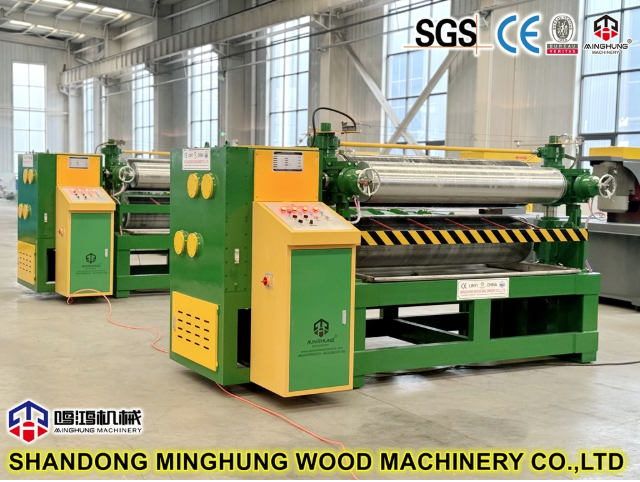
Plywood production begins by converting raw logs into thin wood veneers. This stage determines veneer quality, material recovery, and subsequent processing efficiency. Several machines work together to prepare logs, remove bark, and produce consistent veneer sheets.
Before peeling, logs must be cleaned, cut, and positioned correctly. Proper preparation protects cutting tools and improves the stability of subsequent operations.
The main equipment includes:
Log Debarker: Removes bark, dirt, and other surface materials before veneer peeling. It reduces knife damage and prevents contaminants from entering the production process.
Log Cut-Off Saw: Cuts logs into suitable lengths according to veneer dimensions. Accurate cutting also reduces unnecessary material waste.
Log Loader: Transfers prepared logs into the peeling machine. Automated loading reduces manual handling and supports consistent production.
Log Conveyor: Moves timber between different preparation stations. It helps maintain material flow and reduces transport delays.
Log Conditioning Equipment: Uses controlled heat or water treatment to soften suitable wood species. It can improve peeling performance when conditioning is necessary.
Not every factory requires log conditioning equipment. Its value depends on wood species, log condition, and veneer requirements. For example, some hardwood logs benefit from controlled heating before peeling. Factories should evaluate their typical log diameters and wood species before selecting preparation machinery.
After preparation, logs enter the veneer peeling process. The peeling machine rotates each log against a cutting knife. This action produces continuous or nearly continuous veneer ribbons. Two common peeling systems are available.
Spindle Rotary Peeling Machine
A spindle lathe holds the log through rotating spindles at both ends. It generally handles larger logs and offers controlled peeling conditions. However, the remaining core size limits how much wood can be recovered.
Spindleless Rotary Peeling Machine
A spindleless lathe rotates logs through driven rollers without traditional end spindles. It can process smaller remaining cores, improving recovery under suitable operating conditions.
The peeling line also requires additional equipment:
Veneer Clipper: Cuts veneer ribbons into the required lengths and removes defective sections.
Knife Grinding Machine: Sharpens peeling knives to maintain accurate cutting performance.
Automatic Veneer Stacker: Collects veneer sheets and organizes them for drying.
A high-speed lathe does not guarantee greater factory output. If downstream dryers cannot handle its production volume, veneers will accumulate. Therefore, peeling capacity should match the following processing stages.
Freshly peeled veneers often contain more moisture than adhesive bonding processes can tolerate. Excess moisture can affect bonding quality and cause defects during hot pressing. Factories use drying equipment to control veneer moisture before assembly. Additional machines repair defective sheets and prepare core materials for production.
Veneer dryers remove excess water through controlled heat and airflow. Their operating conditions depend on wood species, veneer thickness, and production requirements. Three common dryer types serve different manufacturing needs.
Roller Veneer Dryer
A roller dryer transports veneers through heated chambers using powered rollers. It supports continuous processing and can handle large production volumes. Operators adjust temperature, airflow, and feeding speed to control drying.
Mesh Belt Veneer Dryer
This system carries veneers on a moving mesh belt. It provides continuous support during drying and suits various veneer dimensions. Its performance depends on belt configuration and drying conditions.
Press Veneer Dryer
A press dryer uses heated platens to dry veneers through direct contact. It can suit selected veneer processing requirements and batch operations.
Factories also need moisture meters to check dried veneers. These devices help operators identify material outside the required moisture range. For example, some plywood processes use veneer moisture targets around 4–10%. However, the correct range depends on adhesives and processing conditions. Operators should confirm their requirements before setting dryer parameters. Uneven drying can produce several problems, including poor bonding and panel deformation. Therefore, temperature consistency matters as much as total drying capacity.
Not every peeled veneer sheet meets the required dimensions or quality standards. Some contain holes, splits, or irregular edges that require further processing.
Several machines help factories recover usable material:
Veneer Patching Machine: Repairs selected defects by inserting matching wood patches into damaged areas.
Veneer Joining Machine: Connects smaller veneer pieces into larger, usable sheets.
Veneer Core Composer: Combines narrow core strips into complete veneer layers.
Veneer Stacker: Organizes finished veneers according to dimensions, thickness, or production requirements.
These machines can improve material utilization and reduce waste. However, repair decisions depend on the finished plywood grade. For example, decorative face veneers require stricter appearance control than many internal core layers. Factories should therefore separate veneers according to their intended applications. A factory purchasing finished, dried veneers may not require peeling or drying equipment. This distinction can significantly reduce its initial machinery requirements.
Once veneers are prepared, they must be bonded into a layered structure. This stage requires consistent adhesive application and accurate veneer positioning. Incorrect glue quantities or poor layer alignment can weaken finished panels. Proper equipment helps maintain uniform bonding conditions across each sheet.
Glue preparation begins by mixing adhesive components according to production requirements. Different plywood applications may require different adhesive systems and curing conditions. A glue mixer combines the required materials before application. Operators must follow the adhesive supplier's recommended mixing conditions and working time. Next, veneers pass through a glue spreading machine. This equipment applies adhesive using controlled rollers.
Important equipment includes:
Glue Mixer: Prepares adhesive mixtures according to the selected formulation.
Glue Spreader: Applies controlled adhesive quantities across veneer surfaces.
Glue Feeding System: Transfers prepared adhesive to the spreading equipment.
Glue Storage Equipment: Holds suitable adhesive materials before production.
Uniform application is more important than simply using more adhesive. Excess glue increases material consumption without guaranteeing stronger bonds. Insufficient application may produce weak bonding or incomplete coverage. Operators should check roller condition, spreading width, and application consistency regularly. They should also maintain appropriate adhesive handling conditions.
After glue application, veneers are arranged into the required panel structure. In conventional plywood, adjacent veneer layers generally have perpendicular grain directions. This arrangement helps improve dimensional stability and balance the panel structure. Factories can use manual assembly stations or automatic lay-up systems. Manual stations require lower initial investment but depend more heavily on labor.
Automatic systems can position veneers more consistently during high-volume production. They also reduce repetitive handling when properly configured. Alignment equipment helps maintain consistent veneer positioning before pressing. Poor alignment can increase trimming waste and create uneven panel edges. The appropriate system depends on production volume and available labor. Smaller factories may operate effectively through carefully managed manual assembly.
Pressing is one of the most important stages in plywood manufacturing. It consolidates assembled veneers and supports adhesive bonding between layers. Factories commonly use hydraulic pressing equipment for this operation. However, cold presses and hot presses perform different functions.
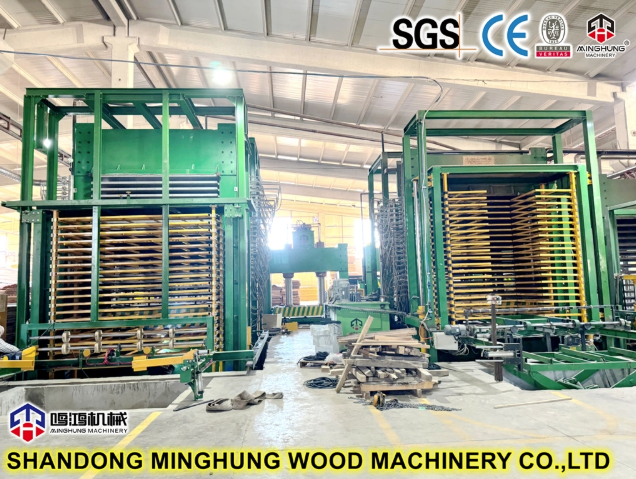
A hydraulic cold press applies pressure to assembled veneer layers before hot pressing. It helps consolidate the stack and improves handling stability. Pre-pressing can reduce movement between layers during subsequent material transfer. It may also improve contact between glued veneer surfaces.
Operators must consider several factors:
Pressing Pressure: Must suit the panel structure and adhesive requirements.
Pressing Duration: Needs sufficient time to achieve the intended pre-pressing effect.
Panel Alignment: Helps prevent uneven edges and unnecessary trimming.
Hydraulic Performance: Should provide stable pressure across the pressing area.
Cold pressing does not replace the final hot pressing operation. Instead, it prepares the assembled panel for further processing. Some factories omit pre-pressing because their adhesive systems or production methods differ. Buyers should confirm whether their process requires this machine.
A hydraulic hot press combines heat and pressure to consolidate plywood panels. Heat activates the curing process required by the selected adhesive. Pressing conditions depend on resin chemistry, panel thickness, and veneer characteristics. A multi-opening hot press processes several panels during one pressing cycle. Its capacity depends on opening count, loading arrangements, and operating conditions.
When evaluating a hot press, buyers should consider:
Platen Size: Determines the maximum panel dimensions that the machine accommodates.
Number of Openings: Influences the number of panels processed per cycle.
Pressing Force: Must provide suitable pressure across the panel area.
Temperature Uniformity: Supports consistent adhesive curing throughout the panel.
Cycle Time: Affects production capacity and depends on the complete pressing process.
Automatic loaders and unloaders can reduce handling time between cycles. They become especially useful when processing larger panel volumes. However, more press openings do not automatically increase overall factory production. The preceding assembly stages must supply sufficient panels. For example, a high-capacity press may remain underused when glue spreading becomes the bottleneck. Buyers should therefore evaluate the complete production line before selecting pressing capacity.
After hot pressing, plywood panels require dimensional adjustment and surface preparation. Finished panels must meet specified thickness, width, length, and appearance requirements. Trimming and sanding equipment completes these operations before inspection and packaging.
Pressed plywood may contain uneven edges or minor thickness variations. Cutting and sanding machines help produce more consistent finished dimensions.
The main machinery includes:
Plywood Edge Cutting Machine: Removes excess material and cuts panels to the specified dimensions.
Double-Sided Trimming Machine: Trims opposing edges while maintaining consistent panel widths or lengths.
Calibrating Sanding Machine: Reduces thickness variation through controlled surface removal.
Wide Belt Sanding Machine: Smooths panel surfaces and prepares them for further finishing.
These machines perform different operations despite their connection within the finishing line. Edge trimming controls panel dimensions, while calibration improves thickness consistency. Surface sanding then produces the required smoothness. Excessive sanding can reduce panel thickness below the specified tolerance. Operators should therefore adjust material removal according to inspection results. Cutting and sanding also generate substantial wood dust. Proper extraction systems help control dust accumulation and maintain safer working conditions.
Some plywood products require additional surface treatments after basic sanding. These operations depend on the intended application and finished product specifications. For example, film-faced plywood requires a suitable overlay material bonded to the panel surface. A film laminating hot press provides the necessary temperature and pressure.
Decorative plywood may require additional veneer overlay equipment. These systems bond selected face veneers to prepared panels. Other supporting equipment includes panel turners and handling devices. They help workers inspect or process both panel surfaces. However, standard unfinished plywood does not always require these machines. Buyers should avoid purchasing additional finishing equipment without a clear product requirement.
A complete plywood factory requires more than primary processing machines. Supporting systems provide heat, power, material handling, dust control, and inspection capabilities. Without them, even well-designed production equipment may experience frequent interruptions.
Important supporting machinery includes:
Steam Boiler or Thermal Oil Heating System: Supplies process heat to compatible dryers and pressing equipment.
Hydraulic Power Unit: Provides hydraulic pressure for machinery requiring external hydraulic systems.
Lift Tables and Conveyors: Transfer veneers and panels between production stations.
Panel Turner: Rotates panels for handling, inspection, or subsequent processing.
Dust Extraction System: Collects airborne wood particles from cutting and sanding operations.
Inspection Equipment: Measures panel dimensions, thickness, moisture, and relevant bonding properties.
Factories must also plan suitable electrical distribution, ventilation, and machine safety systems. Equipment requirements should reflect local regulations and factory operating conditions.
The following table summarizes the primary equipment used across a complete manufacturing line.
Production Stage | Essential Machinery for the Relevant Process | Optional or Process-Dependent Equipment |
Log Preparation | Log debarker, cut-off saw, log handling equipment | Log conditioning equipment |
Veneer Production | Veneer peeling lathe, veneer clipper | Automatic veneer stacker |
Veneer Drying | Veneer dryer, moisture meter | Veneer patching machine, core composer |
Gluing and Assembly | Glue mixer, glue spreader, lay-up station | Automatic lay-up system |
Pressing | Hydraulic hot press | Cold press, automatic loader |
Panel Finishing | Edge trimming machine, sanding machine | Film laminating hot press |
Factory Support | Appropriate heating, electrical, extraction, and inspection systems | Automated conveyors and panel turners |
These requirements describe a factory processing raw logs into finished plywood. Facilities purchasing prepared veneers can omit equipment used for log preparation and veneer production.
Selecting each plywood making machine requires more than comparing individual technical specifications. Buyers should consider how equipment performs throughout the complete production process.
1. Define the Required Plywood Specifications
Identify the target panel dimensions, thickness range, wood species, and finished product grades. These details influence almost every major equipment decision.
2. Calculate the Required Production Capacity
Estimate the planned daily output under realistic operating conditions. Then compare machine capacity across peeling, drying, gluing, pressing, and finishing.
A production line performs best when its main processing stages remain balanced.
3. Evaluate Factory Utilities and Available Space
Check electrical capacity, heating requirements, building dimensions, and material movement routes. Installation space must also accommodate maintenance and safe machine access.
4. Compare Operating Requirements
Review labor needs, maintenance access, spare parts availability, and energy consumption. Lower purchase prices do not always produce lower operating costs.
5. Consider Installation and Technical Support
Ask suppliers about commissioning, operator training, equipment documentation, and maintenance assistance. These services help factories establish reliable production procedures.
A successful plywood factory depends on machines working efficiently throughout production. Veneer peeling, drying, gluing, pressing, and finishing require properly matched equipment. Supporting systems also help maintain consistent quality and production flow. Factories using prepared veneers may need fewer machines than fully integrated production facilities. Before purchasing, buyers should evaluate machine capacity, panel specifications, raw materials, and factory utilities. At Shandong MINGHUNG OSB&MDF Machinery Equipment Manufacturing Co., Ltd., we provide plywood making machine solutions for different production stages. Our equipment supports efficient processing and consistent panel quality. We help customers configure balanced production lines according to their manufacturing requirements.
A: A plywood making machine serves a specific production stage. Essential equipment includes veneer peeling machines, dryers, glue spreaders, hot presses, trimming saws, and sanding machines. Requirements depend on raw materials.
A: A complete plywood making machine production line varies in price according to capacity, automation, and equipment configuration. Buyers should also consider installation, heating systems, maintenance, and factory utilities.
A: Choose each plywood making machine according to panel dimensions, wood species, and production capacity. Match equipment speeds across stages to prevent bottlenecks and maintain consistent manufacturing output.
A: Cold presses consolidate assembled veneers before final bonding. Hot presses apply heat and pressure to cure adhesives. Some production processes require both, while others use hot pressing directly.
A: Yes, factories purchasing prepared, dried veneers can skip log preparation, peeling, and drying equipment. They still need suitable machinery for adhesive application, panel assembly, pressing, and finishing.
A: Common causes include inconsistent veneer moisture, uneven glue spreading, incorrect pressing conditions, and mismatched machine capacities. Regular inspections and balanced equipment configurations help reduce these problems.


